Penang Attractions: 12 Places to Visit in George Town
Last updated: October 2026
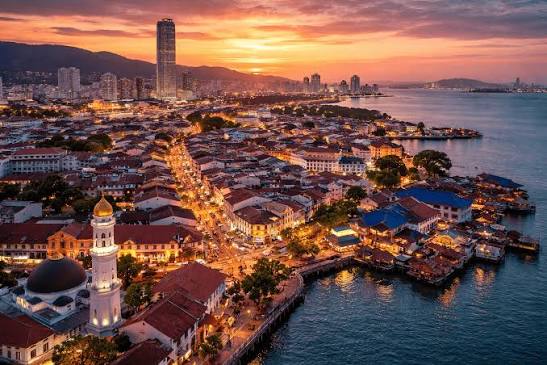
George Town packs a dense concentration of temples, clan houses, colonial forts and street art into its UNESCO World Heritage core. Most of the top Penang attractions sit within walking distance of each other in the heritage zone, with Kek Lok Si Temple and Penang Hill a short Grab ride outside the centre.
This guide lists 12 Penang attractions with verified addresses, opening hours, entry fees and practical tips, all checked in October 2026. Prices are in Malaysian Ringgit (RM). Where an attraction has a dedicated page on this site, the link goes to the full review with photos and directions.
George Town rewards slow exploration. Walk the side streets between the headline sites and you will find incense-filled shrines, kopitiam coffee shops and peeling murals that no list can fully capture. Block out at least two full days to cover the sites below without rushing.
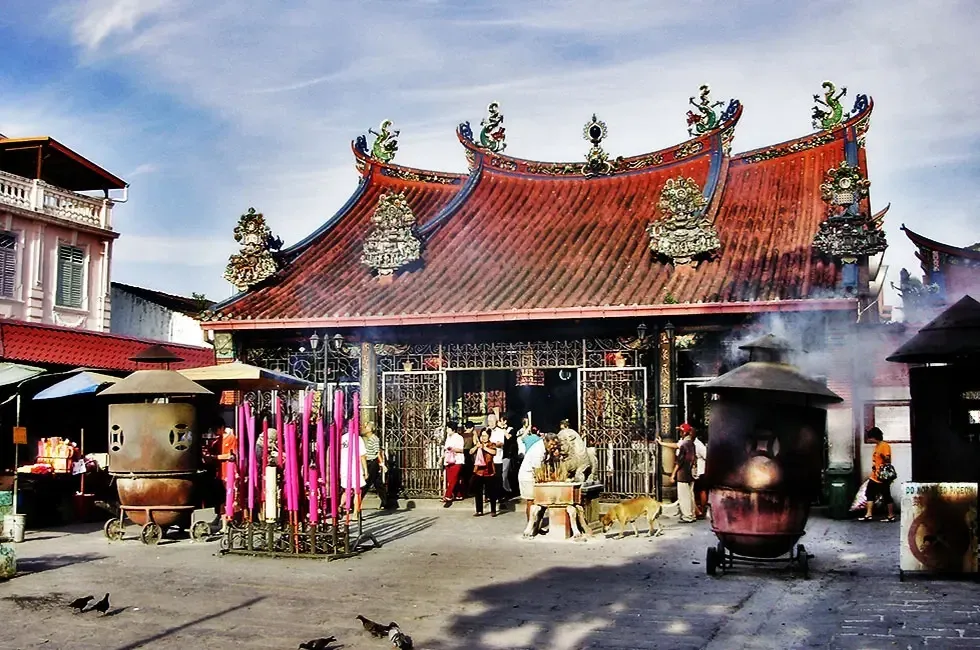
1. Kek Lok Si Temple
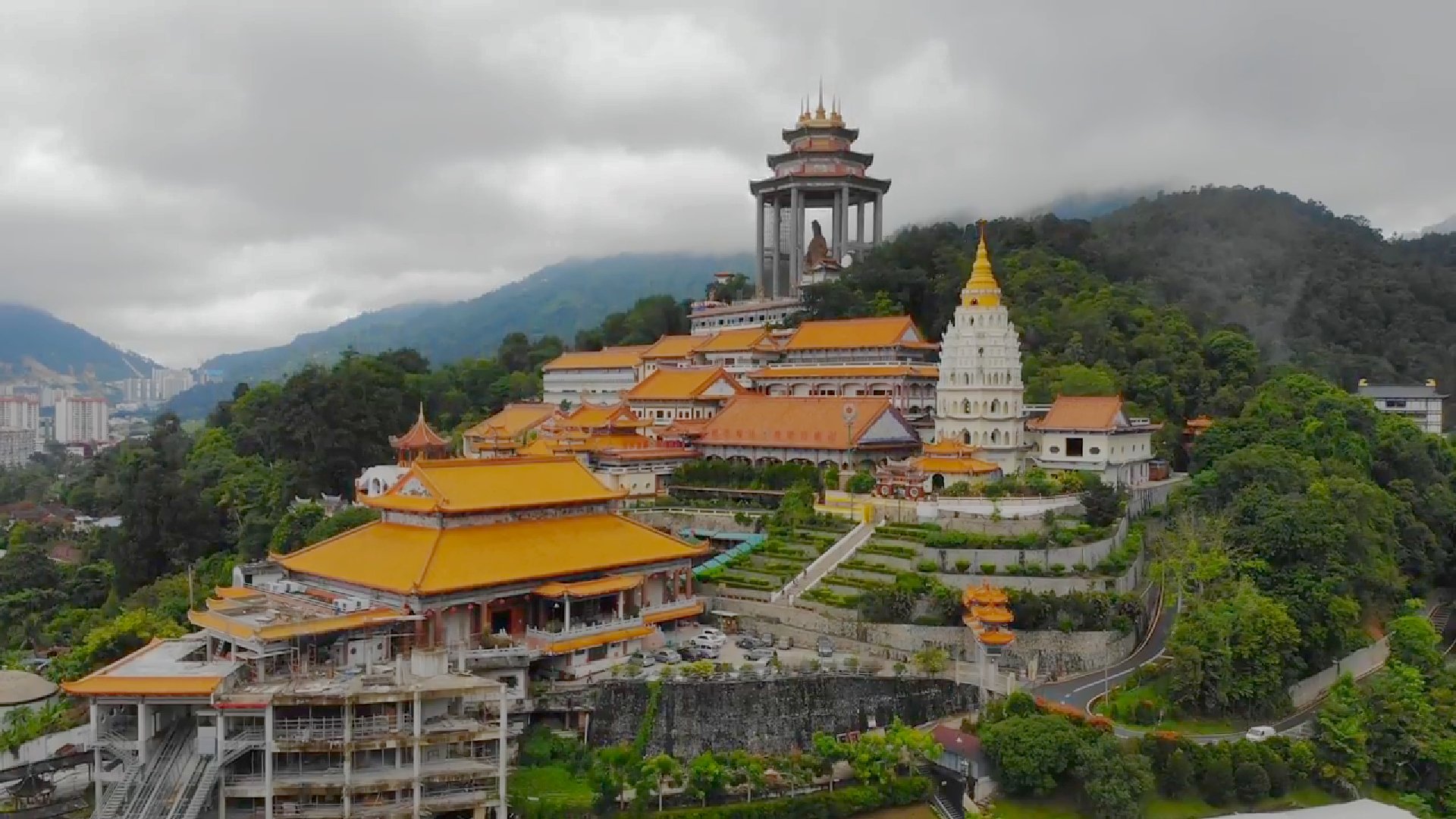
Kek Lok Si Temple sprawls across a hillside in Air Itam, about 20 minutes by Grab from George Town. The complex blends Chinese, Thai and Burmese architecture across multiple tiers of prayer halls, gardens and pavilions. Walking up through the covered arcade of souvenir stalls takes about 10 minutes before you reach the main grounds.
The seven-storey Pagoda of Ten Thousand Buddhas (RM2 to climb) combines a Chinese octagonal base with a Thai middle section and a Burmese crown. Take the inclined lift (RM3) to the upper terrace where a 30-metre bronze Kuan Yin statue stands inside a columned pavilion. Budget 1.5 to 2 hours and arrive before 10 am on weekends to avoid tour groups. During the 30-day Chinese New Year period, the temple stays open until 11:30 pm with elaborate light displays.
2. Penang Hill
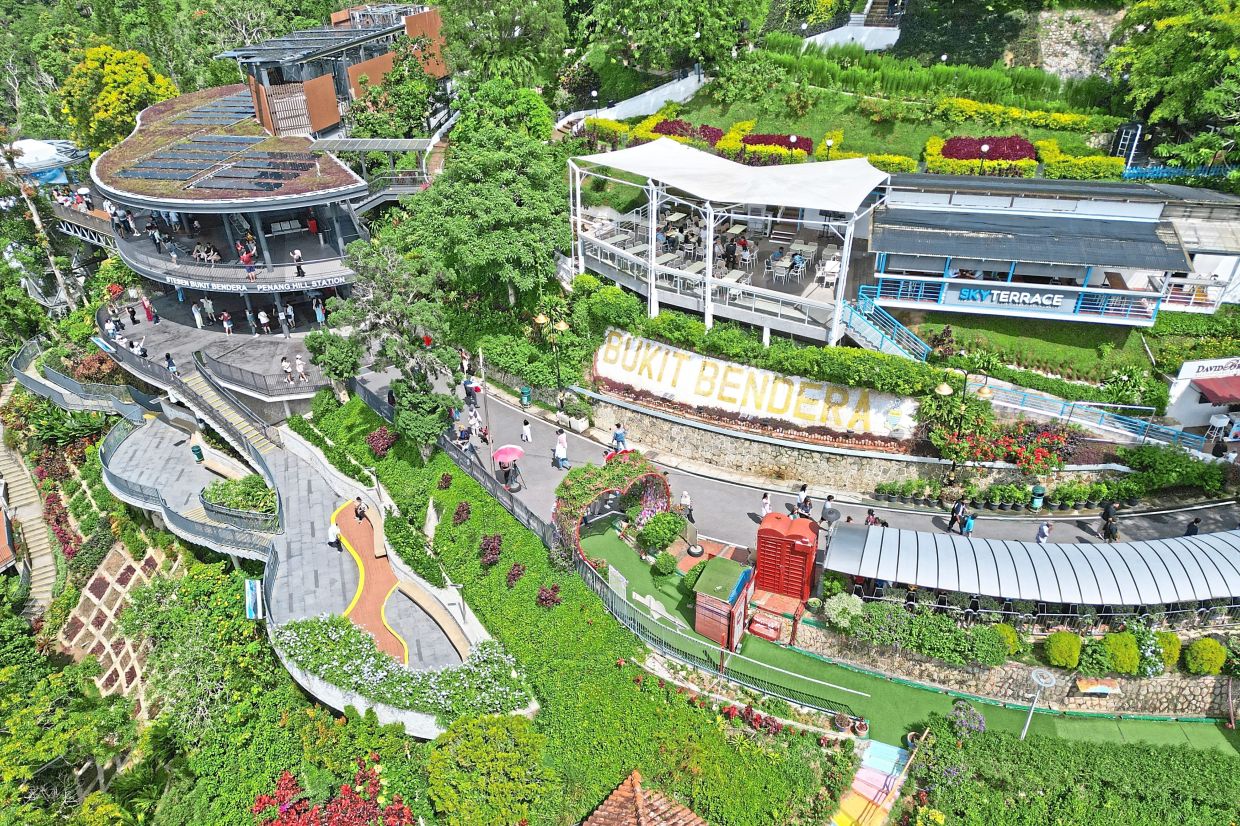
Penang Hill rises 833 metres above sea level and offers a panoramic view of the island, mainland and strait. The Swiss-made funicular takes about five minutes to reach the summit, departing every 15 to 30 minutes. A standard return ticket costs RM30 for foreign adults (RM10 for Malaysians). The RM80 fast-lane ticket lets you skip the queue, which is worth it on weekends when waits can stretch past an hour.
At the top you will find a Hindu temple, a mosque, food stalls and walking paths through the forest canopy. The temperature is about 5 to 7 degrees cooler than at sea level. Late afternoon gives the best photography light, and sunset views over the strait are clear on most days. The last train up leaves at 10 pm. Bring a light jacket for the evening. Ticket counters open at 6:15 am; booking online at penanghill.gov.my is recommended for weekends.
3. Cheong Fatt Tze Blue Mansion
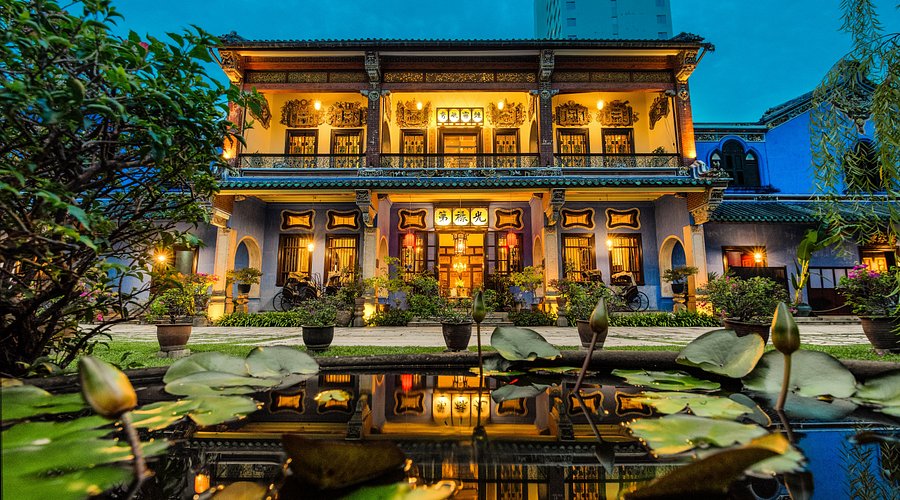
The Cheong Fatt Tze Blue Mansion is a restored 19th-century townhouse painted in a distinctive shade of indigo blue, built by the Hakka merchant Cheong Fatt Tze in the 1880s. The mansion won a UNESCO heritage conservation award and now operates as a boutique hotel with daily public tours.
Guided tours run twice daily at 11 am and 3:30 pm, lasting 45 minutes. Each tour takes a maximum of 24 people, so booking online at cheongfatttzemansion.com is recommended. The guide walks you through the courtyard, reception halls and private quarters, explaining feng shui principles, Hakka craftsmanship and the biography of Cheong Fatt Tze. A self-guided audio tour is also available for the same price, giving you a one-hour window to explore at your own pace. Private group tours (RM350 for up to 12 people) can be arranged with three days' advance notice.
4. Pinang Peranakan Mansion
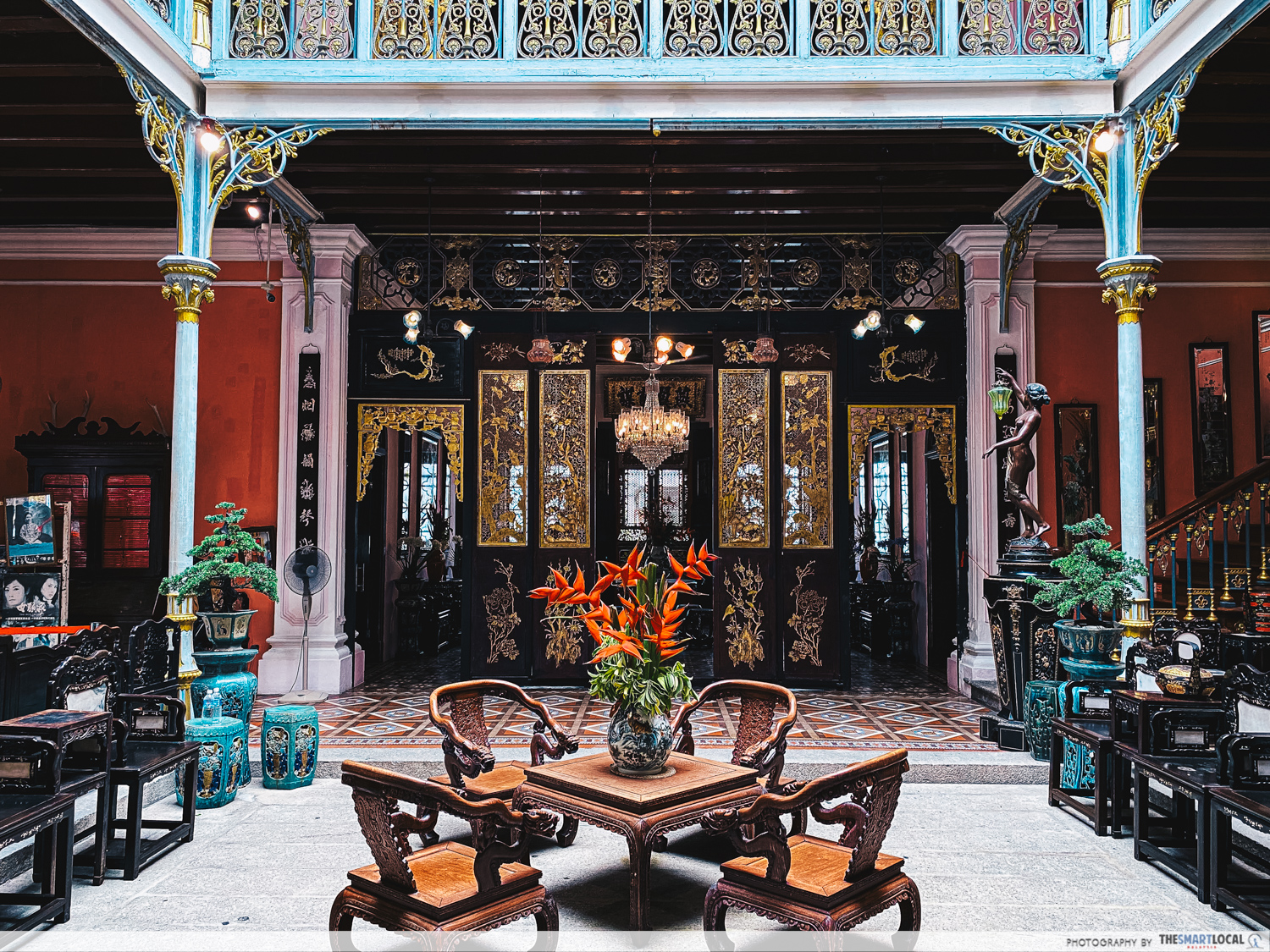
The Pinang Peranakan Mansion on Church Street is a green-fronted townhouse that recreates the lavish domestic world of the Baba-Nyonya, the Straits Chinese community that blended Malay and Chinese customs. The house belonged to Chung Keng Quee, a 19th-century Kapitan Cina and tin-mining magnate.
Inside, over 1,000 antiques fill the rooms: carved blackwood furniture from China, Victorian-era ironwork from Scotland, hand-painted tiles from Stoke-on-Trent and Peranakan porcelain. The entrance fee of RM20 includes a guided tour in English or Mandarin. Photography is allowed throughout. Plan about an hour to see everything. A combo ticket covering both this mansion and George Town Mansion is available for RM25 per adult.
5. Chew Jetty
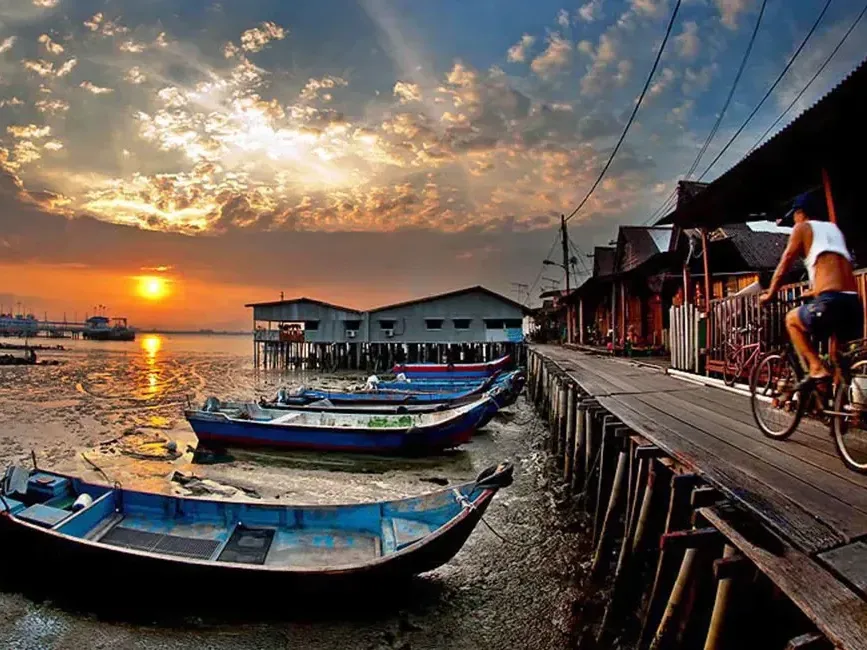
Chew Jetty is the largest and most visited of the six remaining clan jetties along Weld Quay. These waterfront settlements of wooden houses on stilts have been home to Chinese clan communities since the 19th century. The Chew (Zhou) clan jetty extends about 300 metres over the water, with a narrow boardwalk running between residential houses, small shrines and a handful of souvenir shops.
Entry is free. The jetty opens at 9 am and closes at 9 pm because it remains an active residential community. Keep noise low, do not enter private homes and stay on the main boardwalk. The best time to visit is late afternoon, about an hour before sunset, when golden light hits the stilt houses and the jetty faces directly west across the strait. Walk the full length to the temple at the end for the widest view. Combine a visit here with the nearby Hean Boo Thean Floating Temple, which is a two-minute walk south along Weld Quay.
6. George Town Street Art
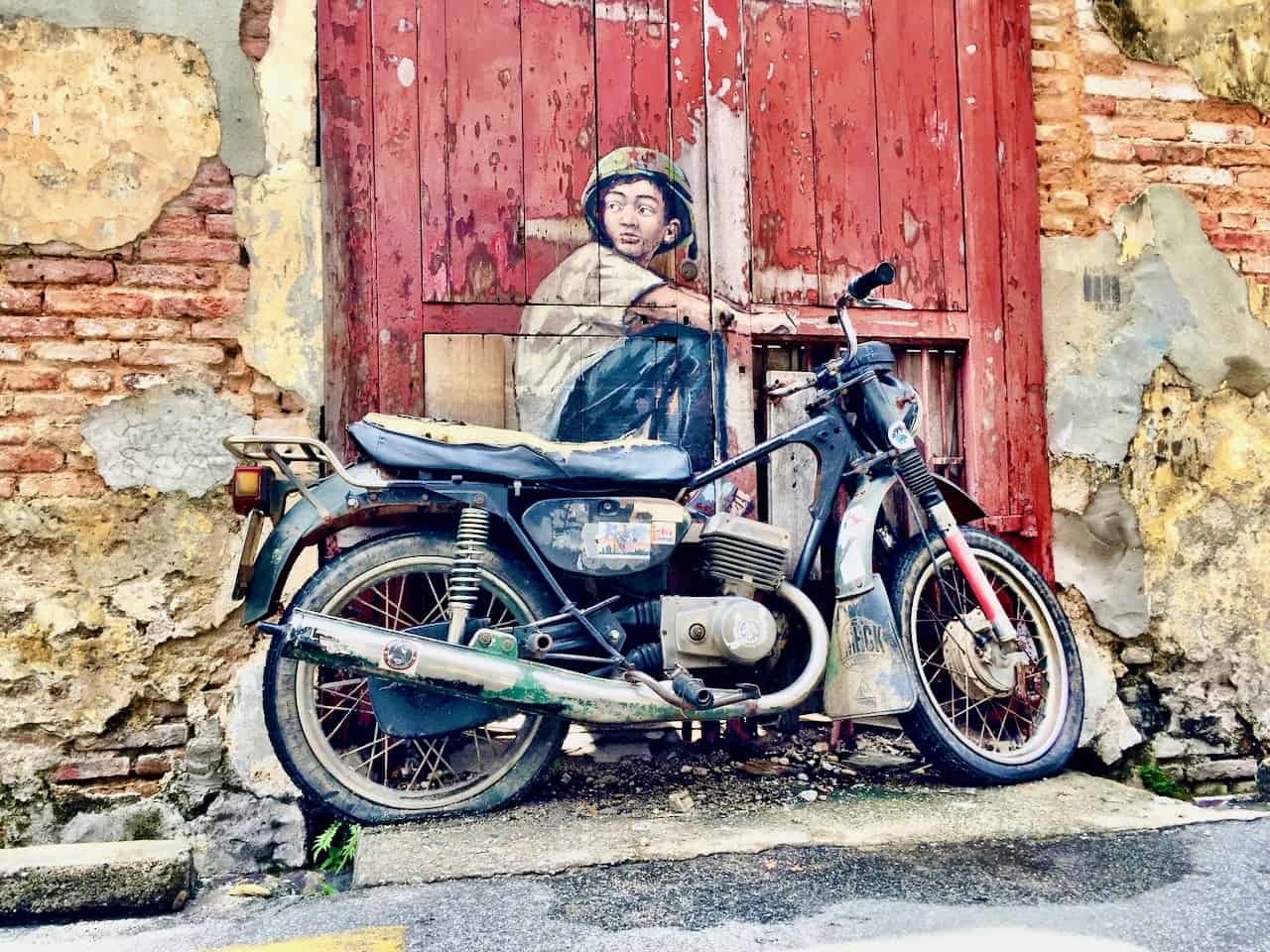
George Town's street art scene started in 2012 when Lithuanian artist Ernest Zacharevic painted a series of murals on shophouse walls across the heritage zone. The most photographed piece, "Children on a Bicycle" at 89 Armenian Street, features two children in monochrome paint riding a real steel bicycle welded to the wall. The mural is periodically maintained and was in good condition as of October 2026.
Beyond the Zacharevic originals, dozens of iron-rod caricature installations line the streets with depictions of Penang life and history. The best concentration runs along Armenian Street, Ah Quee Street, Lebuh Cannon and Muntri Street. Start at Armenian Street and walk south for about an hour, following the trail map available free from the Penang Heritage Trust office. Morning light (before 10 am) works best for photographs on the east-facing walls.
7. Fort Cornwallis
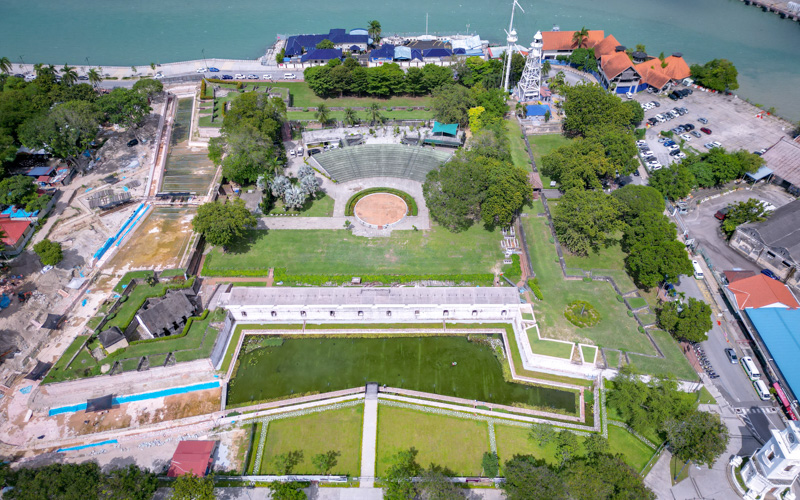
Fort Cornwallis marks the spot where Captain Francis Light first landed in 1786 and claimed Penang for the British East India Company. The star-shaped fort sits on the waterfront at the northeastern tip of George Town, surrounded by a moat that was restored and reopened in 2025. You can now walk the full perimeter of the fort for free; the entry fee applies only to the interior compound.
Inside, a row of Dutch-era cannons lines the ramparts, including the Seri Rambai cannon that locals believe has fertility-granting powers. The small museum and exhibition halls cover the fort's military history and Penang's founding era. Entry costs RM20 and is payable by card only; cash is not accepted at the gate. Guided tours run on Friday, Saturday and Sunday at 10 am, 12 pm, 2 pm and 4 pm. Plan 45 minutes to an hour. The Esplanade field in front of the fort is a popular spot for evening walks and food trucks after dark.
8. Khoo Kongsi
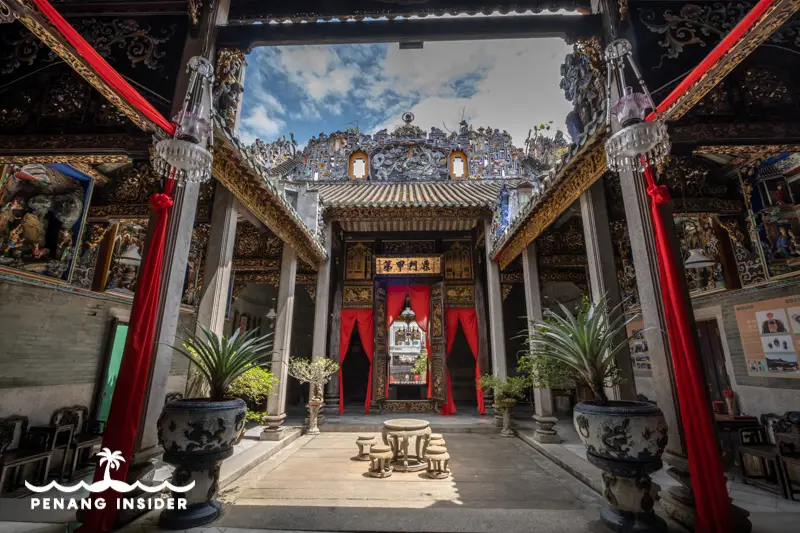
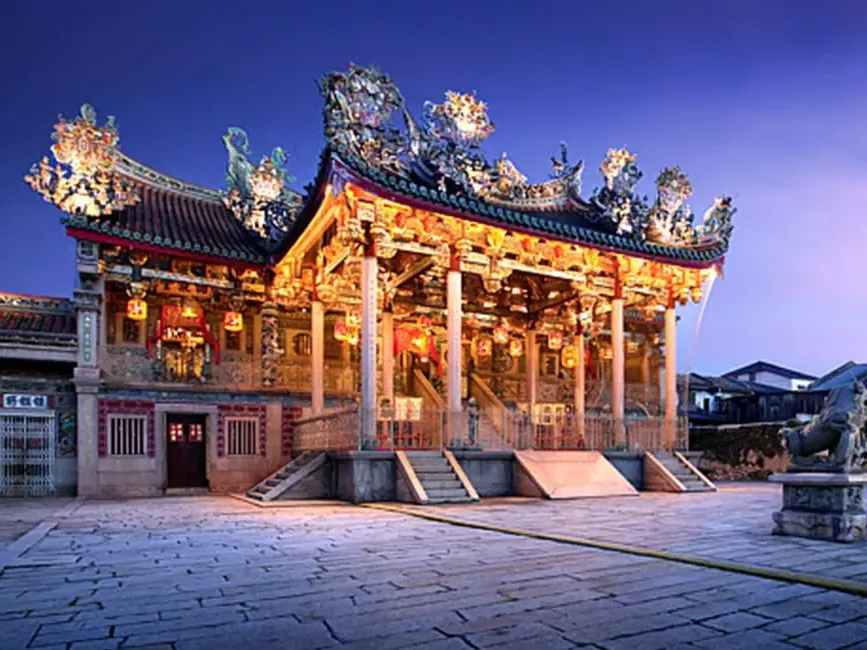
Khoo Kongsi is the grandest Chinese clan temple in Penang, built by the Hokkien Khoo clan in the 1890s and rebuilt after a fire in 1902. The current temple features elaborate roof ridge carvings of dragons, warriors and mythical creatures, gilded pillars and painted wall panels that took craftsmen from southern China years to complete.
Enter from Cannon Square through a narrow alley that opens into the paved courtyard. The main hall on the upper level contains ancestral tablets and a shrine. A museum section on the ground floor displays photographs and artefacts tracing the Khoo clan's history in Penang. Entry is RM10. The complex is compact, so 30 to 45 minutes is enough. Khoo Kongsi is closed on Chinese New Year Eve and Chinese New Year Day. The clan temple sits right within the street art zone, so combine it with a walk along Cannon Street and Armenian Street.
9. Kapitan Keling Mosque
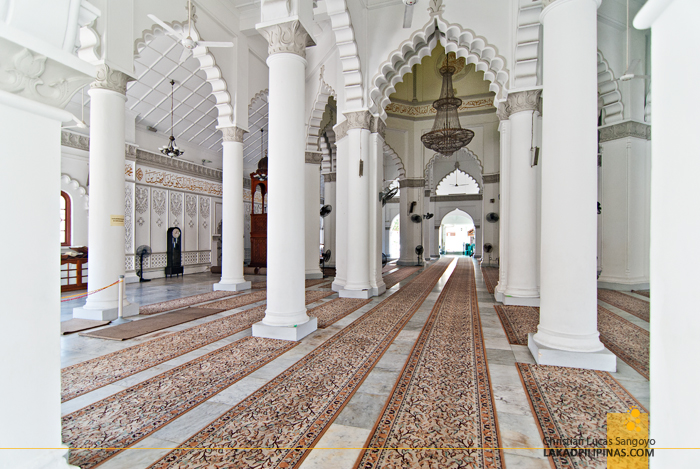
Kapitan Keling Mosque is Penang's oldest and largest Indian Muslim mosque, founded in 1801 by the South Indian community that served in the East India Company. The Mughal-style architecture features a large central dome, a minaret and an arcaded prayer hall surrounded by gardens.
Non-Muslim visitors are welcome outside prayer times. The visiting windows are 11 am to 1 pm, 2 to 4:30 pm and 5 to 6 pm daily. On Fridays, non-Muslim access starts from 2 pm only due to the congregational prayer. Dress modestly: long sleeves and trousers or a long skirt. Women will be offered a headscarf at the entrance. Robes are also available if needed. Entry is free. The mosque sits on the same road as Kuan Yin Teng and Sri Mahamariamman Temple, making it easy to visit all three in a single walk along Jalan Masjid Kapitan Keling. Visiting hours may shift during Ramadan.
10. Sri Mahamariamman Temple
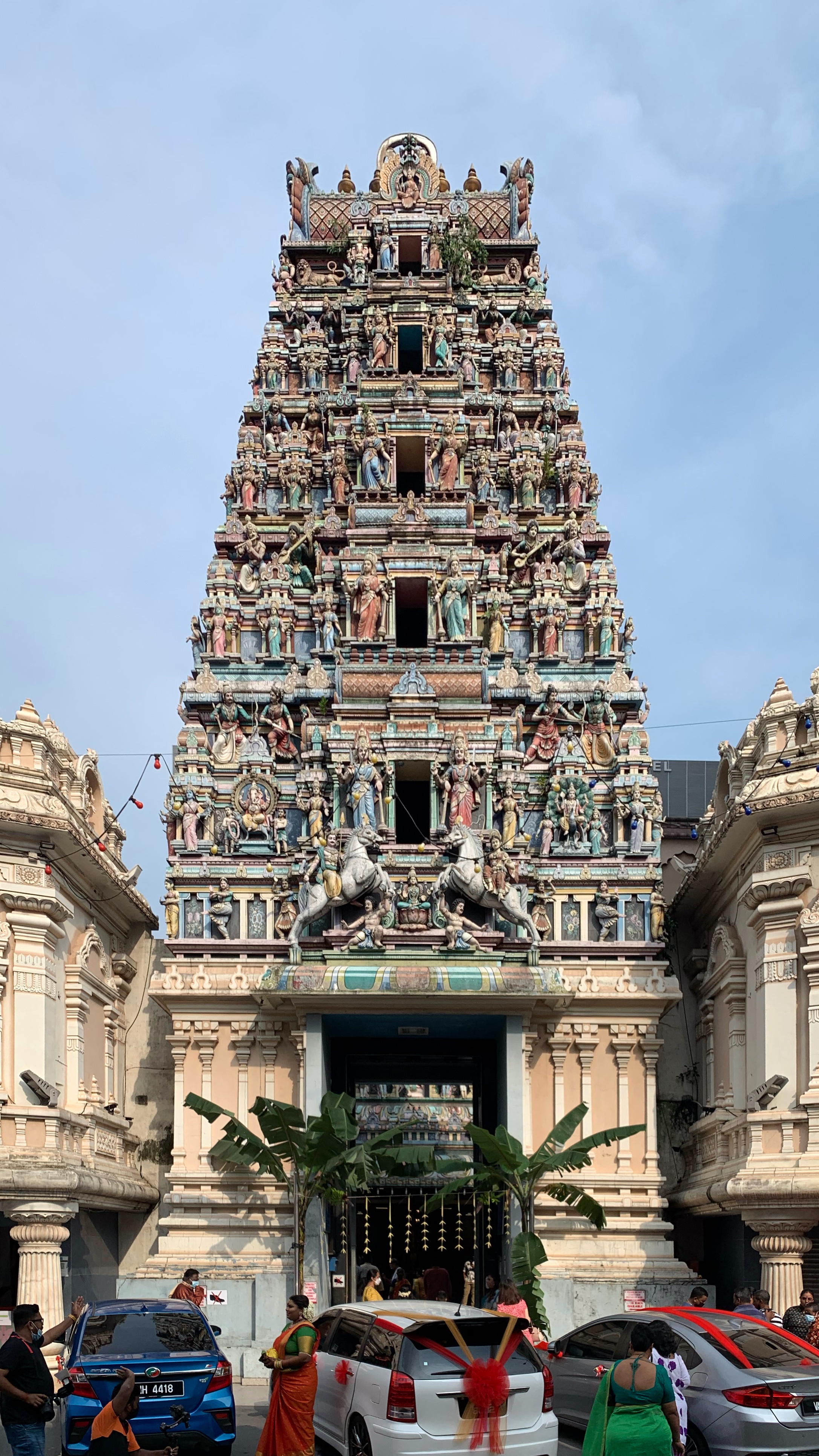
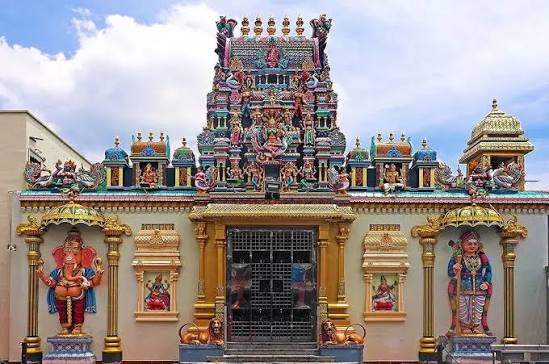
Sri Mahamariamman Temple on Queen Street is the oldest Hindu temple in Penang, built in 1833. The gopuram (tower gateway) is densely carved with sculptures of Hindu deities painted in bright colours. Inside, the main shrine is dedicated to the goddess Mariamman.
The temple is free to enter and follows a split schedule: mornings from 8 am to 12 pm and evenings from 5 to 9 pm. Shoes must be removed before entering the inner sanctum. The temple is most atmospheric during the evening puja ceremony. It sits one block from Kapitan Keling Mosque and Kuan Yin Teng, so all three can be covered in a 30-minute walk along George Town's "Street of Harmony" where four major religions coexist within 200 metres.
11. Hean Boo Thean Floating Temple
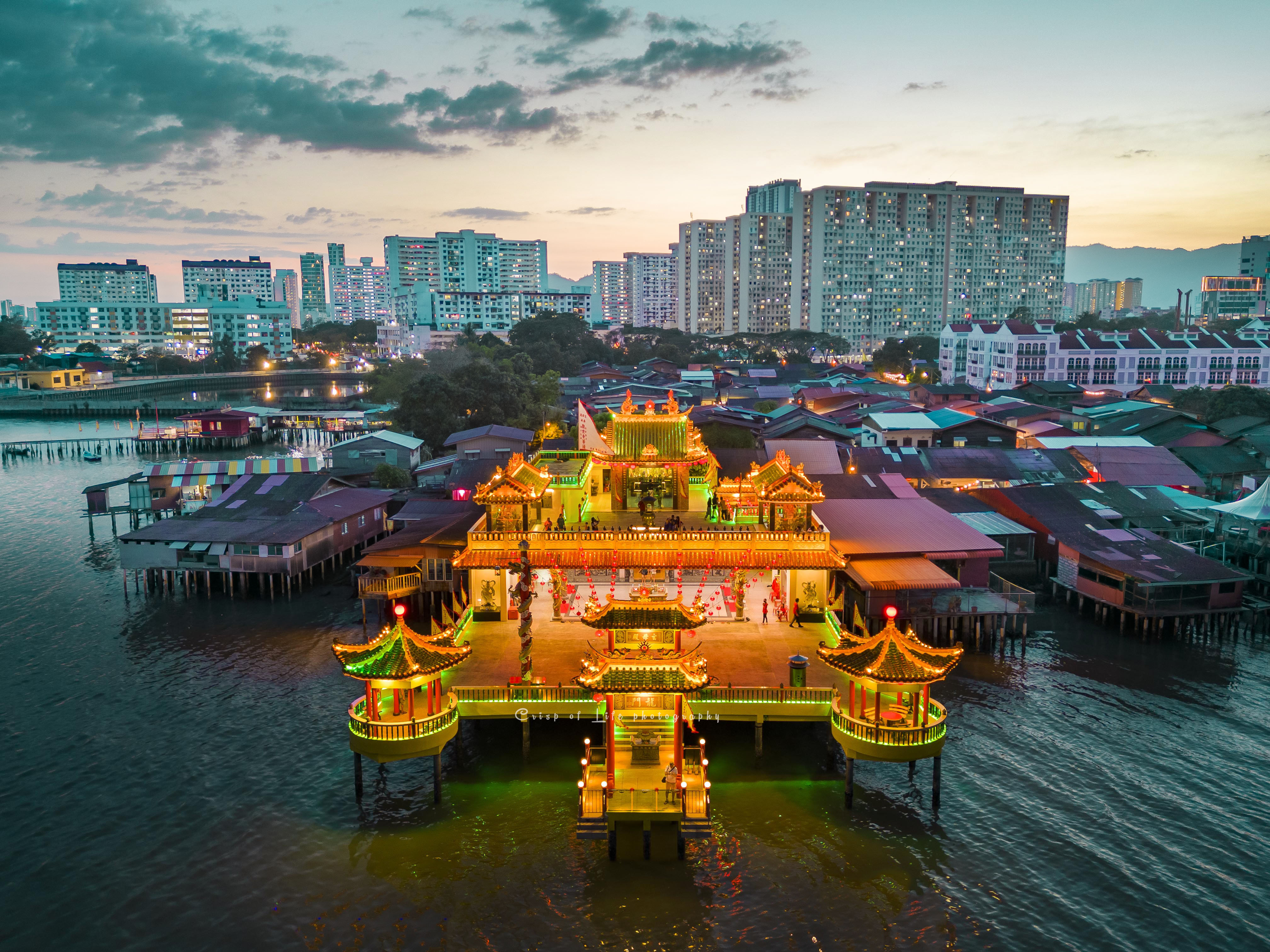
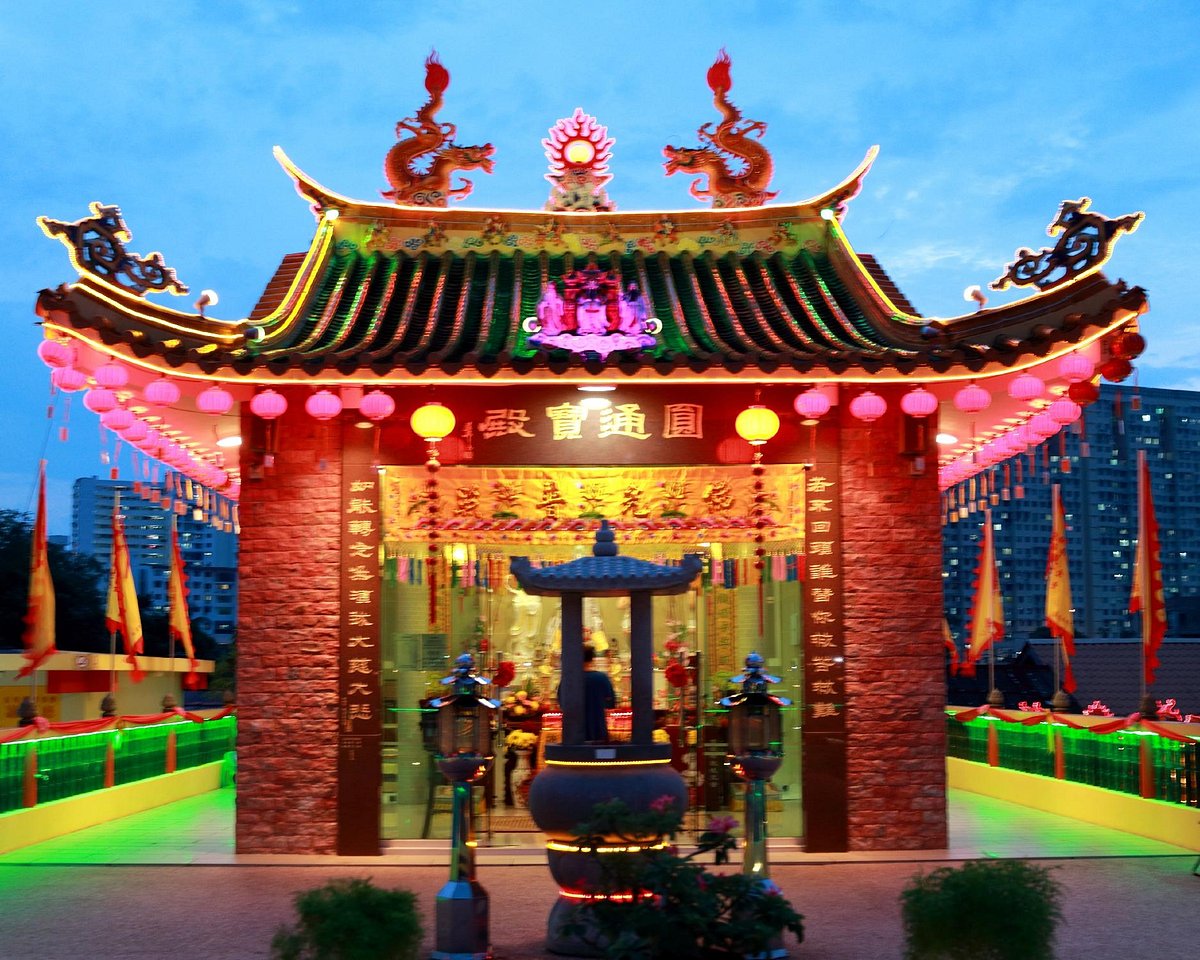
Hean Boo Thean Kuan Yin Temple sits on stilts over the Penang Strait near Yeoh Jetty, about two minutes' walk south of Chew Jetty along Weld Quay. Originally a modest wooden structure built in 1972, the temple was expanded into a two-storey design and reopened in 2012.
The lower deck features a lotus mural and a granite-adorned sanctuary. The upper deck houses the main shrine to Kuan Yin, the Goddess of Mercy, and offers wide views across the water to the mainland. Entry is free. The temple is open daily from 9 am to 6 pm, with extended hours during Chinese New Year. Visit in the late afternoon when the low sun hits the ornate roofline and the waterfront is at its calmest. The temple is best combined with a Chew Jetty visit as part of a Weld Quay walk.
12. Kuan Yin Teng (Goddess of Mercy Temple)
Kuan Yin Teng is the oldest Chinese temple in Penang, built in 1728, predating British colonisation by nearly 60 years. Dedicated to Kuan Yin, the Goddess of Mercy, and Ma Po Cho, the patron saint of sea travellers, the temple sits at the intersection of Jalan Masjid Kapitan Keling and Jalan Pitt.
The temple is free to enter and opens early at 6 am, making it a good first stop on a morning heritage walk. Incense smoke fills the interior throughout the day, and the atmosphere is most active during morning prayers. The surrounding streets are lined with food stalls, particularly on the 1st and 15th days of the Chinese lunar month when worshippers gather in larger numbers. No admission fee and no dress code strictly enforced, though respectful clothing is appreciated.
How to Plan Your Penang Attractions Visit
Day 1: George Town Heritage Core
Start at Fort Cornwallis when it opens at 8 am and walk south along Jalan Masjid Kapitan Keling to hit Kuan Yin Teng, Kapitan Keling Mosque and Sri Mahamariamman Temple in sequence. Break for hawker food at Lebuh Kimberley or Lebuh Chulia, then spend the afternoon at Khoo Kongsi and the street art trail around Armenian Street. End the day at Chew Jetty and the Hean Boo Thean Floating Temple for the sunset.
Day 2: Heritage Mansions and Kek Lok Si
Catch the 11 am guided tour at Cheong Fatt Tze Blue Mansion, then walk to Pinang Peranakan Mansion on Church Street. After lunch, take a Grab to Air Itam for Kek Lok Si Temple. Budget two hours at the temple, then continue to the Penang Hill lower station nearby. The late afternoon funicular ride gives you sunset views from the summit. Come back down after dark for the cooler evening ride.
Getting Around
All George Town attractions in this list are walkable within the UNESCO zone except Kek Lok Si Temple and Penang Hill. For those two, take Rapid Penang bus 204 from KOMTAR or use Grab. A Grab ride from George Town to Air Itam costs roughly RM10 to RM15. Between Kek Lok Si and Penang Hill lower station, a Grab is about RM8. Bring an umbrella or hat for the midday sun and carry water.
Penang Attractions: Frequently Asked Questions
What are the best attractions in Penang for first-time visitors?
Start with Kek Lok Si Temple in Air Itam (free entry to main grounds), walk the George Town street art trail around Armenian Street, and take the funicular up Penang Hill for panoramic views. These three cover temples, heritage culture and scenery in a single day.
How much do Penang attractions cost?
Many Penang attractions are free, including Kek Lok Si Temple grounds, George Town street art, Chew Jetty and Kuan Yin Teng. Paid attractions range from RM10 (Khoo Kongsi) to RM30 (Penang Hill funicular return for foreigners). Budget roughly RM80 to RM120 per person for a full day covering four to five paid sites.
Can you visit all George Town attractions on foot?
Most George Town attractions sit within the UNESCO heritage zone and are walkable. Fort Cornwallis, Khoo Kongsi, the street art trail, Chew Jetty, Kapitan Keling Mosque, Sri Mahamariamman Temple and Kuan Yin Teng are all within a 20-minute walking radius. Kek Lok Si Temple and Penang Hill are outside the core and require a Grab ride or bus.
What time should you start visiting Penang attractions?
Start early, ideally by 8:30 am. Mornings are cooler and most temples open by 9 am. Visit outdoor attractions like the street art trail and Chew Jetty before noon to avoid peak heat. Save indoor sites like the Blue Mansion tour (11 am or 3:30 pm) and Pinang Peranakan Mansion for the afternoon.
Is one day enough for Penang attractions?
One full day is enough to cover four to five attractions in the George Town core. To include Kek Lok Si Temple and Penang Hill, plan for at least two days. A three-day itinerary lets you explore the heritage zone at a relaxed pace with time for hawker food between stops.